


Electrotherapy: What It Is, Its Benefits, and How It's Used Today

Table of Contents
What Is Electrotherapy
Electrotherapy is a branch of physiotherapy that uses different types of electrical current to act on the body's tissues. It's widely used in medicine and rehabilitation to help ease pain, support recovery, improve local blood flow, and support muscle and nervous system function.
Modern electrotherapy covers several techniques, including galvanization, iontophoresis, microcurrent therapy, and pulsed currents. Each has its own characteristics, and the right approach depends on the clinical situation and a specialist's recommendation.
Treatments are carried out both in clinical settings and at home, using certified modern devices. That accessibility and versatility are exactly why electrotherapy remains one of the most widely used physiotherapy methods worldwide.
How Electrotherapy Works
Electrotherapy works by applying electrical impulses of varying frequency and intensity to body tissue. Depending on the mode selected, the current can act on nerve endings, muscles, blood vessels, and other structures.
During a session, the impulses are delivered through electrodes placed on the skin, following the specialist's guidance or the device's instructions. This activates local physiological processes and supports the body's natural recovery mechanisms.
The main effects of electrotherapy can include:
-
reduced pain;
-
improved local blood circulation;
-
lower muscle tension;
-
stimulated neuromuscular activity;
-
support for recovery after injury or physical strain.
Modern devices let you choose different treatment modes depending on the goal and the individual's needs.
Main Types of Electrotherapy
-
galvanization
-
iontophoresis
-
microcurrent therapy
-
pulsed electrotherapy

Основні види електротерапії: гальванізація, електрофорез, мікрострумова терапія та імпульсна електротерапія з використанням апарата MESOFORM THERAPEUTIC
Benefits of Electrotherapy
Electrotherapy is widely used in medicine, physiotherapy, and rehabilitation because it combines effectiveness, safety, and ease of use. Modern techniques can target different mechanisms behind pain and functional issues without resorting to more invasive treatments.
Key benefits include:
-
non-invasive treatment;
-
fits well into broader rehabilitation programs;
-
supports the body's natural healing processes;
-
convenient to carry out;
-
can be used both in clinics and at home;
-
a wide range of applications.

Pain Relief
One of the main reasons electrotherapy is so popular is its ability to ease pain from a variety of causes. It's often used for back, joint, and muscle pain, as well as during recovery from injuries and physical exertion.
Better Blood Circulation
Electrical impulses can activate local physiological processes, which helps improve microcirculation and tissue nourishment.
Muscle Support
Electrotherapy treatments are often used to support muscle function, especially during rehabilitation or periods of limited physical activity.
Convenience and Accessibility
Modern electrotherapy devices are compact and easy to use, which means many treatments can be done at home, following a specialist's guidance and the manufacturer's instructions.
A Complementary Approach to Recovery
Electrotherapy is rarely used as a standalone treatment. It's most often combined with physical therapy, massage, medication, and other recovery methods for a more well-rounded result.
When Electrotherapy Is Used
Electrotherapy can be used as part of a broader treatment and rehabilitation plan for various pain conditions, muscle issues, and situations requiring functional recovery. The specific method, mode, and duration depend on the individual's condition and a doctor's or qualified specialist's recommendations.
Common situations where electrotherapy methods may be used include:
-
back and lower back pain — including muscle strain and certain musculoskeletal conditions;
-
neck and shoulder pain — related to muscle tension or functional issues;
-
neuralgia and pain conditions — as part of a broader recovery program;
-
joint disease and degenerative changes — such as osteoarthritis, as recommended by a specialist;
-
muscle spasms and tension — where relaxation and functional recovery are needed;
-
recovery after injury or surgery — as part of a rehabilitation program;
-
recovery after physical exertion — to support muscles and overall recovery;
-
functional muscle issues — where a specific electrotherapy technique is recommended by a specialist.
Important
Electrotherapy isn't a universal treatment for every condition. What it's suitable for depends on the specific technique, the person's condition, and the type of device used. Before starting, it's important to consider possible contraindications and any health conditions.
For home use, always follow the manufacturer's instructions and a specialist's recommendations.
Contraindications for Electrotherapy
Like any physiotherapy method, electrotherapy comes with certain contraindications and limitations. These can vary depending on the type of treatment, the current's parameters, the treatment area, and the person's overall health.
Before starting, it's important to review the instructions for the specific device and, if you have any health conditions or concerns, consult a doctor.
When Electrotherapy May Be Contraindicated
-
implanted electronic devices, including pacemakers;
-
pregnancy — depending on the type of treatment and the area involved;
-
malignant tumors;
-
acute infections and fever;
-
active bleeding or a tendency toward it;
-
skin damage, irritation, or acute inflammation in the area where electrodes would be placed;
-
sensory impairments that make it hard to properly gauge the intensity of the current;
-
other conditions where a doctor advises against physiotherapy treatments.
Consider the Type of Electrotherapy
Different methods — galvanization, iontophoresis, microcurrent, or pulsed therapy — each have their own specific limitations. With iontophoresis, it's also important to consider contraindications and possible allergic reactions to the medication used during the procedure.
Before Using at Home
If treatments are done at home, it's important to follow the manufacturer's instructions, place electrodes correctly, and use the recommended device settings. If you have a chronic condition or unclear symptoms, consult a medical specialist before starting.
Electrotherapy for Pain and Inflammation
Pain and inflammation can come from joint conditions, injuries, muscle overuse, nerve irritation, and other issues. Electrotherapy can be used as part of a broader treatment and rehabilitation plan, depending on the cause of the symptoms, the type of electrotherapy, and a specialist's recommendations.
Different electrotherapy methods work in different ways, so the choice of treatment and settings should match the specific clinical situation.
For Pain Conditions
Electrotherapy techniques can help reduce pain and support functional recovery. Depending on the method, the effect can target nerve structures, muscles, or other tissue in the treatment area.
Electrotherapy can be part of a broader approach to lower back pain, neuralgic pain, muscle strain, and certain musculoskeletal conditions.
For Joint Conditions
For joint conditions, electrotherapy can be used as part of comprehensive therapy and rehabilitation. The goal depends on the patient's condition and may include reducing pain, maintaining mobility, and restoring functional activity.
Read more about joint conditions and modern treatment approaches in our article on arthritis and osteoarthritis.
For Neuralgia
For some neuralgic pain conditions, electrotherapy methods can be used as part of a comprehensive treatment and recovery plan. The choice of technique depends on the cause of the pain, which nerve is affected, and a specialist's recommendations.
Read more about causes, symptoms, and treatment approaches in our article on neuralgia.
During Rehabilitation
Electrotherapy treatments can also be used in rehabilitation programs after injuries or physical overexertion, alongside other recovery methods, depending on the type of injury, the rehabilitation stage, and the person's condition. More on rehabilitation
Electrotherapy at Home
Modern devices make it possible to perform certain types of electrotherapy not only in physiotherapy clinics, but also at home. That makes treatment more accessible and allows sessions to be done regularly, at a convenient time, following a specialist's recommendations and the manufacturer's instructions.
At-home electrotherapy is especially convenient when treatments are part of a long-term recovery program that requires regular sessions.
Benefits of At-Home Treatment
-
the freedom to do treatments whenever it's convenient;
-
no need for regular trips to a physiotherapy clinic;
-
easier to stick to a recommended course of treatment;
-
a comfortable setting for the procedure;
-
electrotherapy can become part of a broader recovery routine.
What You Need for a Session
At-home electrotherapy requires the right device along with its designated electrodes or accessories. Before starting, review the instructions, choose the correct mode, and place the electrodes as recommended for the specific treatment area.
The intensity of the current should be set according to the device's instructions and shouldn't cause noticeable discomfort.
Safety at Home
Before using electrotherapy at home, consider the indications and contraindications for the specific type of treatment. Don't change the recommended session length or electrode placement on your own, and don't use the device if contraindications apply.
If the cause of pain is unclear, symptoms are getting worse, or new neurological or other concerning symptoms appear, home treatment shouldn't replace seeing a doctor.
Consistency Matters
At-home treatment lets you follow a recommended course without regular trips to a clinic. That said, the number, length, and frequency of sessions depend on the chosen electrotherapy method and your individual recovery program.
MESOFORM THERAPEUTIC and Modern Electrotherapy
MESOFORM THERAPEUTIC is a device for electrotherapy treatments, designed to combine several types of electrical stimulation in a single unit. It offers galvanic current along with mono- and biphasic pulsed modes, making it suitable for a range of treatment and recovery programs.
MESOFORM THERAPEUTIC can be used both as part of comprehensive rehabilitation programs and for individual electrotherapy sessions, in line with its indications, instructions, and a specialist's recommendations.
Four Operating Modes
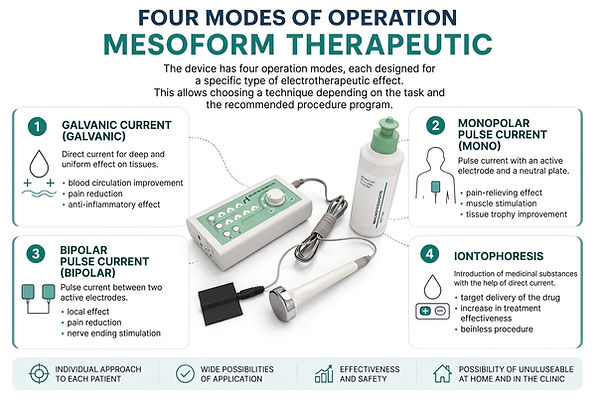
The device has four operating modes, each suited to a specific type of electrotherapy. That makes it possible to choose the right approach depending on the goal and the recommended treatment program.
MESOFORM THERAPEUTIC works with both galvanic and pulsed currents, and also supports iontophoresis treatments for topical medication delivery.
Iontophoresis with MESOFORM THERAPEUTIC
One specific use of the device is medicinal iontophoresis — a method that uses electrical current to deliver medication through the skin. The choice of medication, application method, and course length should be determined by a doctor. Learn more in How to Perform Iontophoresis.
At-Home Electrotherapy with MESOFORM THERAPEUTIC
At-Home Electrotherapy with MESOFORM THERAPEUTIC